News & Articles

The Symptoms and Fundamental Treatments of Avascular Necrosis
- 13:36, 7th September 2018
- Test Organization
- Bones, Joints and Muscles
- Avascular Necrosis
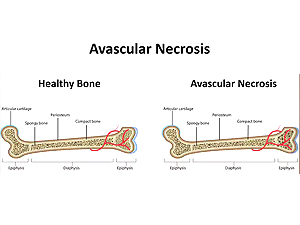
Are you aware of the fact that an interruption of the blood supply to the bone leads to its death? Avascular Necrosis (AVN) is a condition that causes loss of blood to the bone, eventually resulting in the bone to collapse. This commonly occurs in the hip, knees, shoulder, and ankles.
The symptoms of Avascular Necrosis
During the beginning stage, AVN generally shows no symptoms. But, when the disease progresses, it turns out to be painful. The earliest sign is experiencing pain in the bone when applied pressure. The pain becomes constant and it increases as the disease advances. The bone and the joint collapse, leading to excruciating pain and hindering with your capability to use the joint.
The treatment of Avascular Necrosis
The treatment prevents the progression of damaged bone and lessens the pain. Depending on the age, stage of the condition, amount of bone damage and cause of AVN, the doctor advises the best treatment. Once the cause of AVN is identified, the physician prescribes medicines to dissolve blood clots. Anti-inflammatory drugs are also given if there is inflammation of arteries. There are many surgical options if the condition worsens.
Surgical options include:
? Total joint replacement, which replaces the damaged one with a synthetic joint.
? Bone grafts, where a healthy bone from one part of the body is used to replace the damaged one.
? Core decompression, where a part inside the bone is removed to allow new blood vessels to develop.
? Osteotomy, which involves cutting of bones and changing its arrangement.
? Vascularized bone graft, a method where patient’s tissues are used to rebuild the damaged joints. The surgeon replaces the bone with poor blood supply with the bone rich in blood vessels.
If you are looking forward to knowing more about Avascular Necrosis, start a discussion on Curedit.