News & Articles

Test Organization

How do Cochlear Implants work?

  • 6:06, 12th September 2018
  • Test Organization
  • Ears, Nose, Throat and Mouth
  • Cochlear Implantation
How do Cochlear Implants work?


Hearing aids are quite beneficial for those who are suffering from hearing loss. However, there are some individuals who have severe hearing loss and hearing aids are not of enough help. Henceforth, if the sensory cells in the inner ear go through serious damages, a cochlear implant is the best option.

Cochlear is a tiny, medical instrument that works differently than other hearing aids. Rather than intensifying sound, the implant stimulates the auditory nerve, as well. It is important to know that cochlear implants do not restore hearing or cure deafness.

The detailed working of the implants:

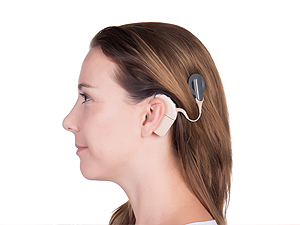
A cochlear implant has two prime components- an external segment that lies over the ear and an internal part that is implanted surgically. A powerful magnet is used to keep the two components attached.

External- This part contains a speech processor, a transmitter and a microphone. The speech processor and microphone are combined which looks like a hearing aid, attached to the behind of the ear. The transmitter is usually linked with a wire, and it is placed in the device’s internal part.

The microphone captures the sound and transfers it to the speech processor. It is then analyzed and is sent to the transmitter, which then codes and transmit to the receiver implanted.

Internal- The internal segment comprises a receiver which is placed under the skin of temporal bone. The work of the receiver is to collect the signals and turn them into electrical pulses. Next, it sends these pulses to the electrodes, which are deeply positioned into the inner ear. The electrodes assist in direct stimulation of the auditory nerve and help the brain to decode the signals as sound.

In case, if you are looking for a cochlear implant device, talk to a specialist at Curedit.

News & Articles

How do Cochlear Implants work?

  • 6:06, 12th September 2018
  • Test Organization
  • Ears, Nose, Throat and Mouth
  • Cochlear Implantation
How do Cochlear Implants work?


Hearing aids are quite beneficial for those who are suffering from hearing loss. However, there are some individuals who have severe hearing loss and hearing aids are not of enough help. Henceforth, if the sensory cells in the inner ear go through serious damages, a cochlear implant is the best option.

Cochlear is a tiny, medical instrument that works differently than other hearing aids. Rather than intensifying sound, the implant stimulates the auditory nerve, as well. It is important to know that cochlear implants do not restore hearing or cure deafness.

The detailed working of the implants:

A cochlear implant has two prime components- an external segment that lies over the ear and an internal part that is implanted surgically. A powerful magnet is used to keep the two components attached.

External- This part contains a speech processor, a transmitter and a microphone. The speech processor and microphone are combined which looks like a hearing aid, attached to the behind of the ear. The transmitter is usually linked with a wire, and it is placed in the device’s internal part.

The microphone captures the sound and transfers it to the speech processor. It is then analyzed and is sent to the transmitter, which then codes and transmit to the receiver implanted.

Internal- The internal segment comprises a receiver which is placed under the skin of temporal bone. The work of the receiver is to collect the signals and turn them into electrical pulses. Next, it sends these pulses to the electrodes, which are deeply positioned into the inner ear. The electrodes assist in direct stimulation of the auditory nerve and help the brain to decode the signals as sound.

In case, if you are looking for a cochlear implant device, talk to a specialist at Curedit.